

A good Spring Pea Risotto is the kind of dish that makes you stop and appreciate the season.
Sweet, bright green peas folded into silky, Parmesan-rich Arborio rice, it’s the sort of bowl that feels both elegant and deeply comforting at the same time.
This recipe is classic Italian in spirit: slow-stirred risotto cooked in warm broth, finished with a generous knob of butter and a flurry of Parmigiano-Reggiano. Fresh peas, mint, and a squeeze of lemon bring all that unmistakable spring freshness to the party.
It comes together in about 45 minutes, making it realistic for a weeknight dinner, but it’s also impressive enough for guests.
Once you master the rhythm of this dish, you’ll keep coming back to it all season long.
If you love light, vegetable-forward pasta dishes, you’ll also want to bookmark my Pasta Primavera, another spring staple that celebrates the season’s best produce.
| Quick Recipe Summary | |
|---|---|
| Prep Time | 10 minutes |
| Cook Time | 35 minutes |
| Total Time | 45 minutes |
| Servings | 4 servings |
| Difficulty Level | Medium |
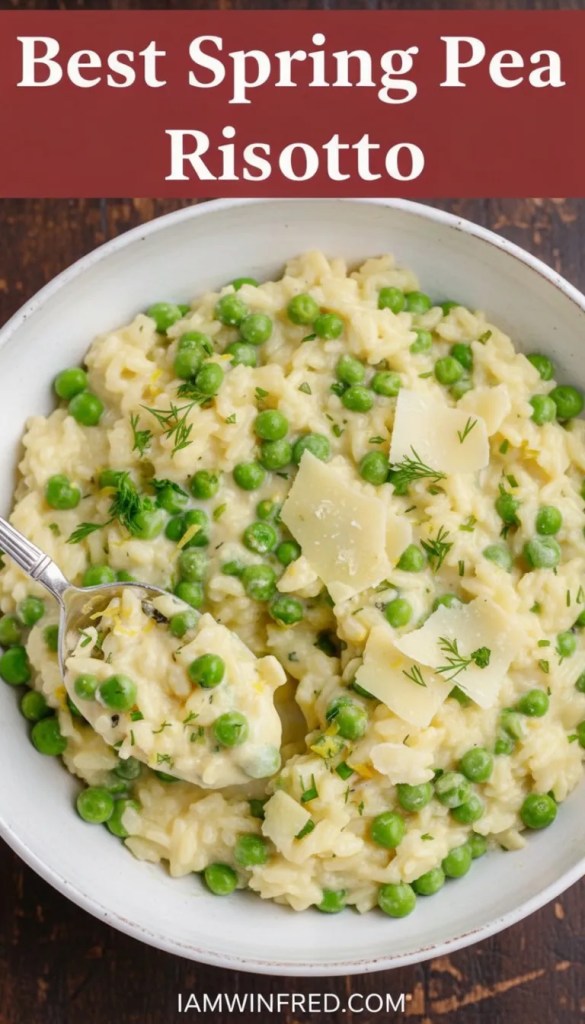
Why You’ll Love This Spring Pea Risotto
This dish hits that rare sweet spot between fancy-feeling and surprisingly approachable.
You don’t need any special techniques, just patience, a good wooden spoon, and a willingness to stir.
The flavors are absolutely gorgeous. Sweet peas, salty Parmesan, fragrant mint, and a hit of lemon zest create layers of brightness that taste unmistakably like spring.
It’s naturally vegetarian, making it a crowd-pleaser for mixed dinner tables. No one ever feels like they’re missing out on anything with a bowl this creamy and satisfying in front of them.
The technique here is forgiving. Once you get the hang of gradually ladling warm broth and stirring, it becomes almost meditative, and the result is consistently creamy risotto every single time.
- Uses simple, seasonal ingredients you can find at any grocery store
- Naturally vegetarian and easily adaptable to be vegan
- Ready in under an hour from start to finish
- Leftovers reheat well and can even be turned into arancini
- The bright green color makes it as beautiful to look at as it is to eat
- Works equally well as a main course or an elegant side dish
You might also enjoy: Lemon Asparagus Risotto
Ingredients
The ingredient list here is straightforward and seasonal. Arborio rice is non-negotiable, its high starch content is what gives risotto that signature creamy texture without any added cream.
Use fresh or frozen peas (both work beautifully), and don’t skip the mint and lemon zest; they’re what makes this recipe sing.
- 1½ cups Arborio rice
- 2 cups fresh or frozen peas, divided
- 5 cups good-quality vegetable broth, kept warm
- 1 cup dry white wine (such as Pinot Grigio or Sauvignon Blanc)
- 1 medium yellow onion, finely diced
- 3 cloves garlic, minced
- 3 tablespoons unsalted butter, divided
- 2 tablespoons extra-virgin olive oil
- ¾ cup freshly grated Parmigiano-Reggiano, plus extra to serve
- Zest and juice of 1 lemon
- ¼ cup fresh mint leaves, roughly torn, plus extra to garnish
- Salt and freshly ground black pepper, to taste
- Extra-virgin olive oil, to drizzle for serving
Read Also: Spring Pea and Mint Salad
Kitchen Equipment Needed
You don’t need any fancy gadgets to make this risotto, just a few reliable basics.
A wide, heavy-bottomed pan or skillet is the most important piece here; it distributes heat evenly and gives you plenty of room to stir without spilling.
- Heavy-bottomed 3-quart saucepan or deep skillet (for cooking the risotto)
- Medium saucepan (for keeping the broth warm)
- Wooden spoon or silicone spatula for stirring
- Ladle
- Chef’s knife and cutting board
- Box grater or Microplane zester/grater
- Blender or food processor (optional, for the pea puree)
- Measuring cups and spoons
Recommended Products for This Recipe
I only recommend products I’ve personally used and loved in my own kitchen. These picks will make your risotto experience smoother, easier, and more delicious.
1. Arborio Rice by RiceSelect
Not all Arborio rice is created equal, and this brand consistently delivers that creamy, al dente texture that makes great risotto so satisfying.
The grains hold up well throughout the long cooking process without turning mushy. It’s the rice I reach for every single time I make risotto.
2. Microplane Premium Classic Zester
A Microplane zester makes getting fine, fluffy lemon zest effortless, and it doubles as a cheese grater for your Parmesan.
For a dish where lemon zest and freshly grated cheese are key finishing touches, this tool genuinely makes a difference. I use mine constantly, and it’s been going strong for years.
3. All-Clad D3 Stainless 3 Qt Saucepan
The right pan is everything for risotto. This All-Clad saucepan distributes heat evenly and prevents hot spots that can scorch the rice.
The wide base gives you plenty of room to stir properly, which is what produces that beautifully creamy consistency. It’s a serious investment, but it will last you decades.
4. Parmigiano-Reggiano Wedge (Imported)
Pre-grated Parmesan in a can simply cannot compete with a freshly grated wedge of real Parmigiano-Reggiano.
The flavor difference is enormous, nutty, complex, and savory in a way that transforms the final dish. Always buy a wedge and grate it fresh for risotto.
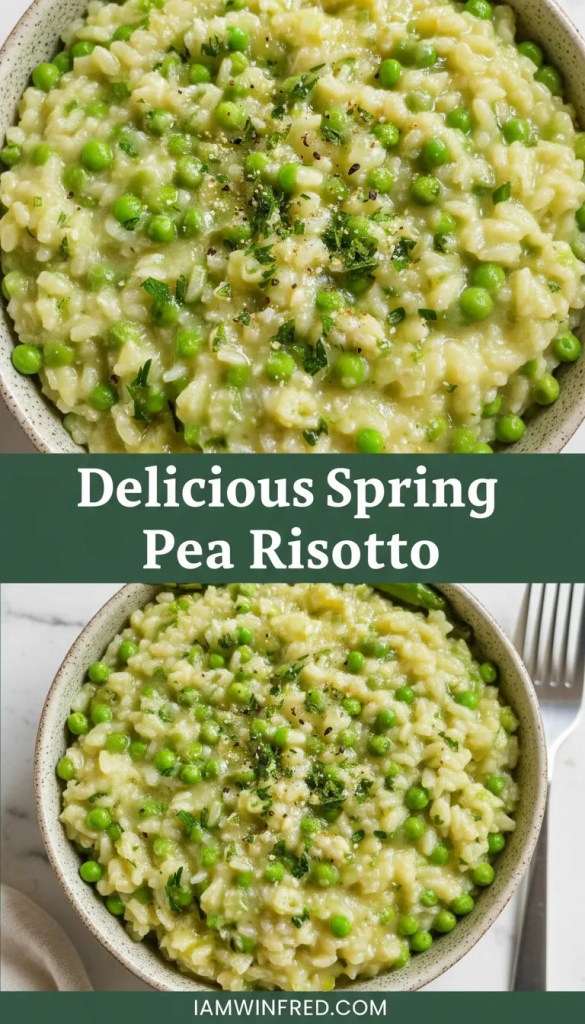
Step-by-Step Instructions: How to Make Spring Pea Risotto
1. Warm the Broth
- Pour the 5 cups of vegetable broth into a medium saucepan and place it over low to medium-low heat.
- You want the broth to be gently steaming and warm throughout the cooking process — not boiling, just hot. Adding cold broth to the risotto would slow down cooking and affect the texture.
- Keep it on the back burner throughout the entire cooking process, giving it an occasional stir to maintain an even temperature.
2. Make the Pea Puree
- Take 1 cup of the peas (half your total amount) and blanch them quickly: bring a small pot of salted water to a boil, add the peas, and cook for 1 to 2 minutes until just tender and bright green.
- Immediately transfer the blanched peas to a bowl of ice water to stop the cooking and preserve that vivid green color. Let them sit for 2 minutes, then drain.
- Place the blanched and drained peas into a blender or food processor. Add 2 to 3 tablespoons of warm broth and a pinch of salt. Blend until smooth and vibrant green.
- Set the pea puree aside — you’ll stir it into the risotto at the very end for a gorgeous green color and an extra burst of pea flavor.
3. Sauté the Aromatics
- Place your heavy-bottomed saucepan or skillet over medium heat. Add the olive oil and 1 tablespoon of the butter.
- Once the butter is melted and the oil is shimmering, add the finely diced onion. Season with a small pinch of salt.
- Cook, stirring occasionally, for 5 to 7 minutes until the onion is very soft, translucent, and starting to turn lightly golden around the edges. Do not rush this step — properly softened onion builds the flavor base of the entire risotto.
- Add the minced garlic and cook, stirring constantly, for another 1 minute until the garlic is fragrant but not browned. Browned garlic will turn bitter, so watch it closely.
4. Toast the Rice
- Add the Arborio rice directly to the pan with the onion and garlic. Stir immediately to coat every grain in the oil and butter mixture.
- Toast the rice for 1 to 2 minutes, stirring continuously, until the edges of the grains look slightly translucent and the rice smells faintly nutty. You should hear a gentle crackling sound as you stir.
- This toasting step is important — it helps the rice maintain some structure during cooking so it doesn’t turn mushy.
5. Deglaze with White Wine
- Pour in the 1 cup of dry white wine all at once. Stand back slightly as it will sizzle vigorously when it hits the hot pan.
- Stir constantly and let the wine cook off, absorbing completely into the rice. This takes about 2 to 3 minutes. The pan should look almost dry before you move on.
- The wine adds acidity and depth of flavor — don’t skip this step, even if you prefer not to cook with alcohol. The alcohol cooks off fully.
6. Add the Broth, Ladle by Ladle
- Add your first ladle of warm broth (roughly ½ cup) to the rice. Stir continuously and adjust the heat so the liquid is at a lively simmer — not a rolling boil and not just sitting stagnant.
- Keep stirring until almost all of the broth has been absorbed. You’ll know it’s ready for the next ladle when you drag your spoon across the bottom and the path holds for a moment before closing back up.
- Add another ladle of broth and repeat. Continue this process, adding one ladle at a time and stirring until absorbed before adding the next.
- This process will take 20 to 25 minutes total. Don’t rush by adding too much broth at once — slow and steady is the secret to creamy risotto. The constant stirring coaxes the starch out of the rice, which is what creates that luscious, velvety consistency.
- After about 18 minutes, start tasting the rice. You’re looking for it to be al dente — tender with just a slight bite in the very center, not chalky, and not mushy.
7. Cook the Remaining Peas
- When you’re adding one of your final ladles of broth (about 3 minutes before you think the risotto will be done), stir in the remaining 1 cup of whole fresh or frozen peas directly into the risotto.
- These whole peas will heat through and cook gently in the last few minutes, giving you pops of fresh texture and sweetness throughout the dish.
- If using frozen peas, no need to thaw them first — the warm risotto will take care of that quickly.
8. Finish the Risotto
- Remove the pan from the heat. This is crucial — the finishing steps happen off the heat to prevent the cheese and butter from seizing or the risotto from overcooking.
- Stir in the remaining 2 tablespoons of cold butter, cut into small pieces. Stir vigorously until fully melted and emulsified into the rice. This step is called “mantecatura” in Italian and is what gives risotto that final glossy, creamy consistency.
- Add the freshly grated Parmigiano-Reggiano and stir until completely melted and incorporated.
- Spoon in the bright green pea puree and fold it through gently. Watch the risotto transform into that gorgeous spring-green color.
- Add the lemon zest and a squeeze of fresh lemon juice, starting with half the lemon and tasting as you go. Add more to your preference.
- Stir in the torn fresh mint leaves.
- Taste and season generously with salt and freshly ground black pepper.
9. Check the Consistency and Serve
- Classic risotto should be “all’onda” — meaning it flows like a wave when you tilt the plate. If your risotto is too thick, stir in a splash of warm broth until it loosens to your preferred consistency.
- Divide the risotto immediately between warm bowls. Risotto waits for no one — it will continue to absorb liquid and firm up as it sits, so serve it right away.
- Garnish each bowl with extra grated Parmigiano-Reggiano, a few fresh mint leaves, an extra pinch of lemon zest, and a light drizzle of your best extra-virgin olive oil.
- Add a crack of black pepper over the top and serve immediately.
For another elegant Italian-inspired dish, my Spinach Tomato Tortellini is a quick and satisfying weeknight option in the same spirit.
Tips for The Best Spring Pea Risotto
A few small habits make a big difference when it comes to risotto. The most important? Keep your broth warm the entire time and never stop stirring.
Cold broth shocks the rice and breaks the cooking rhythm, while under-stirring means less starch release and less creaminess in the final bowl.
- Use warm broth at all times. Keep it at a gentle simmer on the back burner throughout cooking. Cold broth disrupts the texture and temperature of the rice.
- Don’t rush the onion. Fully softened, golden onion is the flavor foundation of the risotto. Give it the full 5 to 7 minutes it needs.
- Toast the rice properly. Those 1 to 2 minutes of toasting help the grains hold their shape and contribute a subtle nuttiness to the overall flavor.
- Stir consistently but not obsessively. You don’t need to stand there and never stop for a second — but do stir frequently and never walk away from the stove.
- Add broth in small additions. One ladle at a time keeps the process controlled and ensures each addition is fully absorbed and the starch is properly released.
- Finish off the heat. Removing the pan before adding the butter and cheese ensures a silky emulsion rather than a greasy or grainy sauce.
- Use cold butter for the finish. Cold butter emulsifies better and creates a creamier result than melted or room-temperature butter.
- Season at the end. Broth already contains salt, and Parmesan is salty too. Always taste before adding salt so you don’t over-season.
- Serve immediately. Risotto firms up quickly as it sits. Eat it while it’s still beautifully loose and creamy.
Read Also: Spring Vegetable Stir Fry
Serving Suggestions
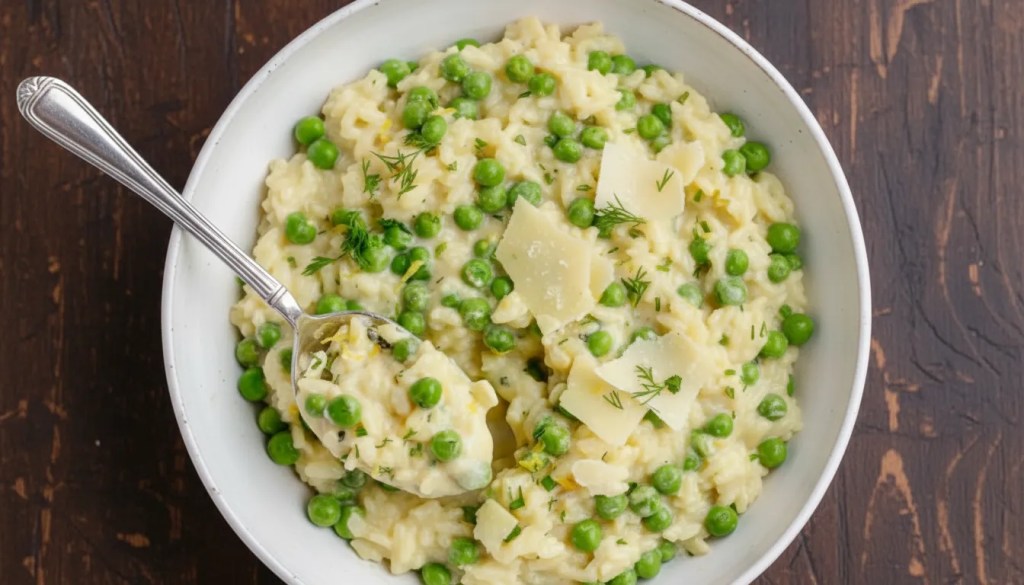
Spring Pea Risotto is naturally a complete, satisfying main course on its own.
The combination of starchy rice, protein from Parmesan, and the natural sweetness of peas makes it genuinely filling, no sides required if you’re keeping things simple.
That said, it also makes a stunning side dish alongside a light protein or a crisp salad.
- Lemon Herb Baked Salmon — the citrus in both dishes makes for a seamlessly cohesive spring meal
- Prosciutto Wrapped Asparagus — a classic Italian pairing that brings a salty, crispy contrast
- Cucumber Salad — a cool, refreshing side that balances the richness of the risotto
- Green Beans Almondine — simple, elegant, and perfectly seasonal
- A simple arugula salad with shaved Parmesan and a lemon vinaigrette for a light, peppery counterpoint
- Crusty bread for soaking up any extra risotto left in the bowl — highly recommended
Variations of Spring Pea Risotto
This recipe is delicious as written, but it’s also a wonderful canvas for creativity.
Swap the vegetables, add protein, or adjust the finishing flavors based on what’s in season or what’s in your fridge, risotto is wonderfully forgiving in that way.
- Add prosciutto or pancetta. Crisp up thin slices in the pan before starting the risotto and use the rendered fat in place of some of the olive oil. Scatter the crispy bits over the top when serving for a salty, savory contrast.
- Add shrimp. Pan-sear seasoned shrimp separately and place them on top of each bowl just before serving. The sweetness of shrimp pairs beautifully with peas — similar to the flavors in my Lemon Garlic Shrimp Orzo.
- Make it vegan. Replace the butter with good olive oil and swap the Parmesan for nutritional yeast or a vegan Parmesan substitute. The risotto will still be rich and satisfying.
- Add asparagus. Cut asparagus spears into 1-inch pieces and stir them in alongside the whole peas in the final few minutes of cooking for a classic spring combination.
- Use basil instead of mint. For a more summery, Italian herb flavor, swap the mint for torn fresh basil leaves added at the very end.
- Add mascarpone. Stir in a heaping tablespoon of mascarpone at the finish for an extra-luxurious, ultra-creamy result.
- Make it lemony. Double the lemon zest and add a full lemon’s worth of juice for a brighter, more acidic dish — gorgeous with grilled fish.
Storage and Reheating
Risotto is always best eaten immediately after cooking, but leftovers are absolutely worth saving.
The texture changes as it sits, it firms up significantly, but with the right reheating method, it comes back to life beautifully.
You can also transform leftovers into crispy arancini (fried risotto balls) for a completely different and equally delicious dish.
- Refrigerator storage: Transfer cooled risotto to an airtight container and refrigerate for up to 3 days.
- Freezer storage: Risotto can be frozen, though the texture becomes a bit softer after thawing. Freeze in individual portions in airtight containers for up to 1 month.
- Stovetop reheating (best method): Place leftover risotto in a saucepan over medium-low heat. Add a splash of warm broth or water — about 2 to 3 tablespoons per serving — and stir continuously until heated through and creamy again. Add a little fresh Parmesan if needed.
- Microwave reheating: Transfer to a microwave-safe bowl, add a splash of broth or water, cover loosely, and heat in 30-second intervals, stirring between each, until hot throughout.
- Turn leftovers into arancini: Shape cold risotto into balls around a small cube of mozzarella, coat in breadcrumbs, and pan-fry or bake until golden and crispy on the outside.
Nutritional Facts
The following nutritional information is an estimate per serving (based on 4 servings), calculated using standard ingredient values.
| Nutritional Information (Per Serving) | |
|---|---|
| Calories | ~490 kcal |
| Carbohydrates | ~65g |
| Protein | ~14g |
| Fat | ~16g |
| Saturated Fat | ~8g |
| Fiber | ~5g |
| Sugar | ~5g |
| Sodium | ~680mg |
| Calcium | ~200mg |
| Iron | ~3mg |
Note: Nutritional values are approximate and will vary depending on specific brands of ingredients used.
Health Benefits of Key Ingredients
Beyond tasting wonderful, this Spring Pea Risotto is built on ingredients with some genuinely impressive nutritional profiles.
It’s a dish you can feel good about eating, especially when so many comfort food recipes leave you feeling heavy and sluggish afterward.
- Green peas are an excellent plant-based protein source, and they’re rich in fiber, vitamin C, vitamin K, and folate. Their natural sweetness comes with a low glycemic impact, making them a great complex carbohydrate source.
- Arborio rice provides sustained energy through complex carbohydrates. It’s a good source of iron and several B vitamins essential for energy metabolism.
- Parmesan cheese is rich in calcium and protein. Because of its intense flavor, a small amount goes a long way nutritionally without needing to use excessive quantities.
- Olive oil is loaded with heart-healthy monounsaturated fats and powerful antioxidants like oleocanthal, which has anti-inflammatory properties.
- Lemon juice and zest are excellent sources of vitamin C and flavonoids that support immune function and help the body absorb plant-based iron more efficiently.
- Fresh mint contains menthol and rosmarinic acid, compounds associated with digestive comfort and mild anti-inflammatory effects.
For a fresh salad that’s equally packed with spring goodness, check out this vibrant Spring Pea and Mint Salad, it uses similar ingredients and works beautifully as a starter before this risotto.
FAQs About Spring Pea Risotto
1. Can I use frozen peas instead of fresh?
Absolutely — frozen peas work wonderfully in this recipe and are often sweeter and more consistent in quality than out-of-season fresh peas.
There’s no need to thaw them before adding; just stir them into the risotto in the final few minutes of cooking.
For the pea puree portion of the recipe, you can blanch frozen peas straight from the freezer, just add them to the boiling water for 1 minute, then transfer immediately to ice water.
2. Do I have to use white wine?
The white wine adds a wonderful layer of acidity and complexity, but it’s not essential.
You can simply substitute the same volume of additional warm vegetable broth and add an extra squeeze of lemon juice at the end to replicate some of that brightness.
If you do use wine, choose something dry that you’d actually enjoy drinking, it doesn’t need to be expensive, but avoid anything labeled “cooking wine,” which often contains added salt and preservatives.
3. What’s the best rice for risotto?
Arborio is the most widely available risotto rice and the one called for in this recipe.
It has a high starch content that produces that characteristic creamy texture. Carnaroli or Vialone Nano are other Italian varieties that work equally well, some chefs actually prefer Carnaroli for its firmer bite.
Do not substitute long-grain rice, basmati, or jasmine rice. They don’t have the right starch composition to create creamy risotto and will result in a completely different (and disappointing) dish.
4. How do I keep risotto from drying out when reheating?
The key is always adding liquid when you reheat. Risotto absorbs liquid as it sits, which is why it firms up so dramatically in the fridge.
Add 2 to 3 tablespoons of warm broth or water per serving and stir over low heat until it comes back to that loose, creamy consistency.
Avoid high heat when reheating, it will cause the outside of the rice to dry out before the inside has warmed through. Low and slow is the approach, with frequent stirring.
5. Can I make risotto ahead of time?
You can partially cook it ahead, cook the risotto about 80% of the way through, then spread it out on a baking sheet to cool quickly. Refrigerate it for up to a day.
When ready to serve, pick it back up from where you left off: reheat gently in the pan with a ladle of warm broth and finish with butter, Parmesan, peas, and lemon.
This is actually a technique used in restaurants, where risotto is rarely cooked entirely to order.
It gets you 90% of the freshness with much more manageable timing when you’re cooking for guests.

Spring Pea Risotto
Ingredients
- 1½ cups Arborio rice about 300g; do not substitute with long-grain or basmati rice
- 2 cups fresh or frozen peas about 280g, divided — 1 cup for the puree, 1 cup stirred in whole; no need to thaw if frozen
- 5 cups vegetable broth about 1.2 litres; kept warm on low heat throughout cooking
- 1 cup dry white wine about 240ml; Pinot Grigio or Sauvignon Blanc recommended; substitute with extra broth if preferred
- 1 medium yellow onion finely diced
- 3 cloves garlic minced
- 3 tablespoons unsalted butter about 42g, divided — 1 tablespoon for sautéing, 2 tablespoons cold for finishing
- 2 tablespoons extra-virgin olive oil about 30ml
- ¾ cup Parmigiano-Reggiano about 75g, freshly grated; plus extra for serving
- 1 lemon zested and juiced; start with half the juice and add more to taste
- ¼ cup fresh mint leaves roughly torn; plus extra to garnish
- 1 cup peas from the 2 cups above; blanched and blended with 2–3 tablespoons warm broth
- salt to taste; season at the end as broth and Parmesan both contain salt
- freshly ground black pepper to taste
- extra-virgin olive oil for drizzling over each bowl to serve
- Parmigiano-Reggiano extra, freshly grated, for garnish
- fresh mint leaves extra, for garnish
- lemon zest extra pinch for garnish over each bowl
Equipment
- Heavy-bottomed 3-quart saucepan or deep skillet For cooking the risotto; wide base is important for even heat distribution
- Medium saucepan For keeping the broth warm throughout cooking
- Wooden spoon or silicone spatula For stirring the risotto
- Ladle For adding broth one portion at a time
- Chef’s knife and cutting board For dicing onion and mincing garlic
- Microplane zester or box grater For zesting the lemon and grating Parmesan
- Blender or food processor (optional) For making the pea puree; a fork can be used in a pinch
- Measuring cups and spoons
- Small pot For blanching the peas for the puree
- Bowl with ice water For shocking the blanched peas to preserve color
Method
- Pour the vegetable broth into a medium saucepan and place over low heat, keeping it gently steaming but not boiling throughout the entire cooking process. Warm broth is essential — cold broth will disrupt the cooking and affect the final texture of the risotto.
- Blanch 1 cup of the peas in salted boiling water for 1–2 minutes, then immediately transfer to a bowl of ice water to preserve the bright green color. Drain, blend with 2–3 tablespoons of warm broth and a pinch of salt until smooth, then set aside.
- Heat the olive oil and 1 tablespoon of butter in a heavy-bottomed pan over medium heat, then add the diced onion with a pinch of salt and cook for 5–7 minutes until very soft and translucent. Add the minced garlic and cook for 1 more minute, stirring constantly, until fragrant but not browned.
- Add the Arborio rice to the pan and stir to coat every grain in the oil and butter. Toast for 1–2 minutes, stirring continuously, until the edges of the grains look slightly translucent and the rice smells faintly nutty.
- Pour in the white wine all at once and stir constantly until it has been fully absorbed by the rice, about 2–3 minutes. The pan should look almost dry before you proceed to adding the broth.
- Add the warm broth one ladle (about ½ cup) at a time, stirring frequently and waiting until each addition is nearly absorbed before adding the next. Continue for 20–25 minutes until the rice is al dente — tender with a slight bite in the center.
- About 3 minutes before the risotto is done, stir the remaining 1 cup of whole peas directly into the pan. They will heat through and cook gently in the last few minutes, adding pops of sweetness and texture throughout.
- Remove the pan from the heat, then stir in the remaining 2 tablespoons of cold butter, the grated Parmesan, the pea puree, lemon zest, lemon juice, and torn mint leaves until fully combined and glossy. Taste and season generously with salt and black pepper.
- If the risotto is too thick, stir in a splash of warm broth until it flows like a wave when you tilt the pan. Divide immediately between warm bowls and garnish with extra Parmesan, fresh mint leaves, a pinch of lemon zest, a drizzle of olive oil, and cracked black pepper.
Nutrition
Notes
- Use warm broth at all times. Keep the broth at a gentle simmer on the back burner throughout the entire cooking process — adding cold broth will disrupt the texture and temperature of the rice.
- Stir frequently but not obsessively. You don’t need to stir every single second, but stay at the stove and stir regularly to coax the starch out of the rice for a creamy result.
- Finish off the heat. Always remove the pan from the heat before adding the butter, Parmesan, and pea puree — this ensures a silky emulsion rather than a greasy or grainy sauce.
- Use cold butter for the finish. Cold butter emulsifies better than room-temperature or melted butter and produces a creamier, glossier result.
- Frozen peas work great. No need to thaw before using; add them directly to the risotto in the final minutes and they’ll warm through perfectly.
- Skip the wine if needed. Simply replace the white wine with an equal amount of warm vegetable broth and add an extra squeeze of lemon at the end for brightness.
- Make it vegan. Substitute the butter with good-quality olive oil and replace the Parmesan with nutritional yeast or a vegan Parmesan alternative.
- Partial make-ahead method. Cook the risotto 80% of the way, spread on a baking sheet to cool, and refrigerate for up to 1 day. When ready to serve, reheat gently in the pan with a ladle of warm broth and finish as directed.
- Reheating leftovers. Add 2–3 tablespoons of warm broth or water per serving and stir over low heat until creamy again — never reheat on high heat or the rice will dry out.
- Turn leftovers into arancini. Shape cold risotto into balls around a small cube of mozzarella, coat in breadcrumbs, and pan-fry or bake until golden and crispy on the outside.
Private Notes
Tried this recipe?
Let us know how it was!Conclusion
Spring Pea Risotto is one of those recipes that genuinely earns a permanent spot in your seasonal rotation.
It’s the kind of dish that feels special enough for a dinner party but accessible enough for a quiet weeknight meal when you want something warm, nourishing, and a little bit beautiful.
The combination of silky Arborio rice, sweet peas, salty Parmesan, fresh mint, and bright lemon is everything good food should be: simple ingredients treated with care, resulting in something far greater than the sum of its parts.
Give this recipe a try this spring, I think you’ll love it. And if you do make it, leave a comment below to let me know how it turned out.
I’d love to hear your thoughts, any tweaks you made, or questions you have.
Recommended:
- Spring Vegetable Tart
- Lemon Chicken and Rice
- Asparagus Soup No Cream
- Honey Garlic Salmon
- Greek Lemon Rice


