

Bun rieu is the kind of soup that makes you stop mid-bite and ask what’s actually in this broth.
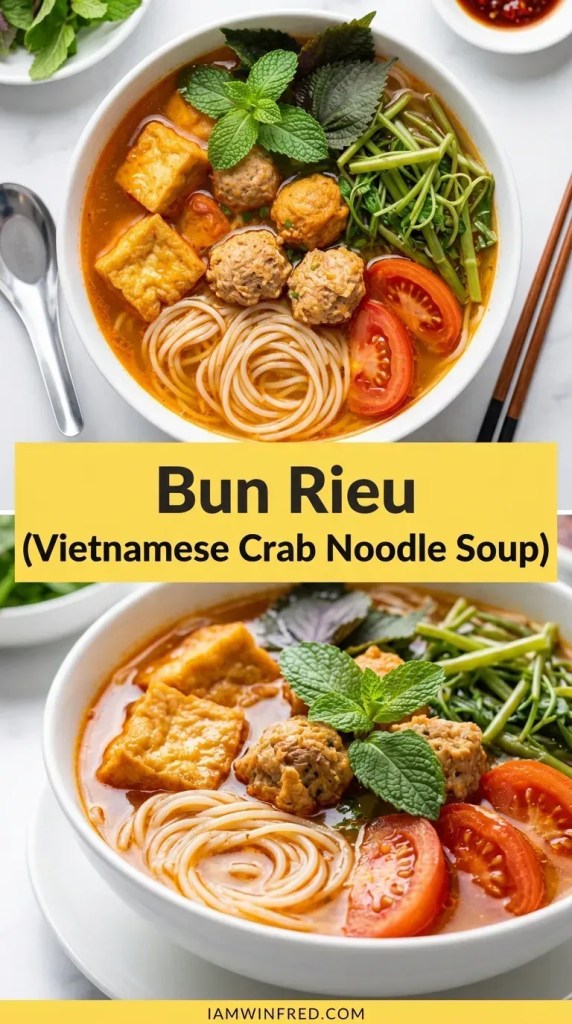
It’s a Vietnamese rice noodle soup built on a tomato based stock, topped with delicate crab and pork meatballs, fried tofu, and a mountain of fresh herbs.
If you’ve only had pho, this recipe is going to open your eyes to a whole different side of Vietnamese cooking.
The broth gets its signature tang and color from ripe tomatoes and a touch of shrimp paste, while the meatballs (called “rieu”) bring a light, almost custardy texture that’s completely different from anything else in your noodle soup rotation.
I make this at home whenever I want something that feels special but doesn’t actually take all day, and once you see how the pieces come together, you’ll understand why it’s such a beloved comfort food across Vietnam.
| Quick Recipe Summary | |
|---|---|
| Prep Time | 30 minutes |
| Cook Time | 45 minutes |
| Total Time | 1 hour 15 minutes |
| Servings | 6 bowls |
| Difficulty Level | Moderate |
This pairs beautifully with my Bun Bo Hue on a weekend when you’re in the mood for a full Vietnamese noodle soup lineup.

Why You’ll Love This Bun Rieu Recipe
This soup hits every note you want from a bowl of noodle soup, and it does it without a ton of exotic techniques.
The broth is bright, tangy, and savory all at once, and the crab meatballs practically melt in your mouth.
It’s also endlessly customizable. You can pile on whatever herbs and vegetables you have around, and every bowl ends up feeling a little different.
- Tangy tomato broth that’s balanced, not overpowering
- Tender crab and pork meatballs with a light, delicate texture
- Loaded with fresh herbs for brightness and crunch
- Naturally gluten free when made with rice vermicelli and fish sauce
- Freezes well, so it’s great for meal prep
- A fun introduction to Vietnamese cooking beyond pho
You might also enjoy: Pho if you want to compare two of Vietnam’s most iconic noodle soups side by side.
Ingredients
Most of these ingredients are easy to find at a regular grocery store, though a few specialty items are worth a trip to an Asian market or an online order.
Don’t skip the shrimp paste or fish sauce. They’re what give this broth its deep, savory backbone.
For the broth:
- 8 cups chicken or pork stock
- 2 tablespoons neutral cooking oil
- 1 small yellow onion, diced
- 4 garlic cloves, minced
- 6 medium ripe tomatoes, cut into wedges
- 2 tablespoons tomato paste
- 2 tablespoons fish sauce
- 1 tablespoon shrimp paste
- 1 tablespoon sugar
- Salt and black pepper, to taste
- 1 block fried tofu, cut into cubes
For the crab and pork meatballs (rieu):
- 1/2 pound ground pork
- 1/2 pound lump crab meat
- 2 tablespoons dried shrimp, soaked and minced
- 2 large eggs
- 2 tablespoons minced shallots
- 1/2 teaspoon salt
- 1/4 teaspoon black pepper
For serving:
- 1 pound dried rice vermicelli noodles
- Bean sprouts
- Fresh herbs (cilantro, perilla leaves, mint)
- Sliced green onions
- Lime wedges
- Chili oil or sliced fresh chilies
Read Also: Crab Bisque Recipe
Kitchen Equipment Needed
You don’t need any specialty equipment to pull this off, just a few reliable basics.
A large stockpot does most of the heavy lifting here, and a good strainer keeps your broth clear and clean.
- Large stockpot (at least 6 quarts)
- Mixing bowls
- Fine mesh strainer
- Cutting board and sharp knife
- Ladle
- Wooden spoon
- Measuring cups and spoons
This pairs beautifully with my She Crab Soup if you’re building out a whole seafood soup collection at home.
Recommended Products for This Recipe
These are a few products I personally reach for whenever I make bun rieu, because they genuinely make the process easier and the results more authentic.
None of these are required, but they’ve all earned a permanent spot in my kitchen.
1. Vietnamese Crab Paste with Soybean Oil
This jarred crab paste is what a lot of home cooks in Vietnam actually use to build that deep, savory backbone in the broth.
It saves you from having to track down fresh paddy crab, and it still delivers that unmistakable briny depth.
A small jar goes a long way and keeps well in the fridge.
2. Enameled Cast Iron Stockpot
A heavy bottomed stockpot heats evenly, which matters a lot when you’re simmering a tomato based broth for close to an hour.
It also holds heat well, so the broth stays at a gentle simmer without constant babysitting.
I’ve had mine for years and it still looks brand new.
3. Fine Mesh Spider Strainer
This is the tool I use to gently lower the meatballs into the broth and scoop them back out once they float.
It’s much gentler on delicate crab meatballs than tongs or a slotted spoon, so they hold their shape better.
4. Dried Rice Vermicelli Noodles
Good quality vermicelli makes a noticeable difference here.
Thinner, well made noodles soak up the broth without turning mushy, which keeps every bowl tasting fresh even on the second day.
5. Perilla and Herb Garden Starter Kit
Perilla leaves aren’t always easy to find fresh at a regular grocery store, so growing your own is a great workaround.
It’s a fun little project and means you’ll always have fresh herbs on hand for this soup and others like it.
Another favorite: Seafood Chowder Recipe
Step-by-Step Instructions: How to Make Bun Rieu
1. Prepare the Crab and Pork Meatball Mixture
- In a large mixing bowl, combine the ground pork, lump crab meat, minced dried shrimp, eggs, minced shallots, salt, and black pepper.
- Use your hands or a spoon to mix everything together gently until just combined. Avoid overmixing, since this can make the meatballs tough.
- Cover the bowl and set the mixture in the refrigerator while you prepare the broth. This helps the mixture firm up slightly, which makes it easier to shape later.
2. Build the Tomato Broth Base
- Heat the neutral cooking oil in your large stockpot over medium heat.
- Add the diced onion and minced garlic, and cook for 2 to 3 minutes, stirring often, until fragrant and slightly softened.
- Add the tomato wedges and tomato paste, then stir well to coat the tomatoes in the aromatics.
- Cook for 5 to 7 minutes, stirring occasionally, until the tomatoes begin to break down and release their juices.
3. Simmer the Broth
- Pour the chicken or pork stock into the pot with the tomato mixture.
- Stir in the fish sauce, shrimp paste, and sugar until fully dissolved.
- Bring the broth to a gentle boil, then reduce the heat to a low simmer.
- Let the broth simmer uncovered for 20 minutes so the flavors have time to meld together.
- Taste and adjust with salt and black pepper as needed.
4. Cook the Crab and Pork Meatballs
- Remove the meatball mixture from the refrigerator.
- Using a spoon or your hands, scoop out portions about 1 to 2 tablespoons in size and gently shape them into loose balls. They don’t need to be perfectly round.
- Raise the heat under the broth so it returns to a gentle boil.
- Carefully lower the meatballs into the simmering broth one at a time using a spoon.
- Let the meatballs cook undisturbed for about 8 to 10 minutes, until they float to the surface and are cooked through.
- Add the cubed fried tofu to the pot during the last 5 minutes of cooking so it warms through without falling apart.
5. Cook the Rice Vermicelli Noodles
- While the meatballs cook, bring a separate pot of water to a boil.
- Add the dried rice vermicelli noodles and cook according to the package instructions, usually 3 to 5 minutes, until tender but not mushy.
- Drain the noodles and rinse briefly under cool water to stop the cooking process and prevent sticking.
- Divide the noodles evenly among serving bowls.
6. Assemble and Serve
- Ladle the hot broth over the noodles in each bowl, making sure to distribute the tomatoes, meatballs, and tofu evenly.
- Top each bowl with bean sprouts, fresh herbs, and sliced green onions.
- Serve immediately with lime wedges and chili oil on the side so everyone can adjust the heat and acidity to their liking.
This method works well alongside my Asian Beef Noodle Soup if you want to compare broth building techniques across different noodle soups.
Tips for The Best Bun Rieu
A few small details make a big difference in how this soup turns out, especially when it comes to the broth and the meatballs.
Take your time here, since rushing the simmer or overworking the meatball mixture are the two most common ways this recipe goes sideways.
- Use ripe, in season tomatoes for the most flavorful and naturally sweet broth
- Don’t overmix the meatball mixture, or the texture will turn dense and rubbery
- Keep the broth at a gentle simmer once the meatballs are in, since a hard boil can break them apart
- Taste the broth before serving and adjust the fish sauce, sugar, and salt to your preference
- Rinse the cooked noodles under cool water to keep them from clumping in the bowl
You might also enjoy: Shrimp Bisque Recipe
Serving Suggestions
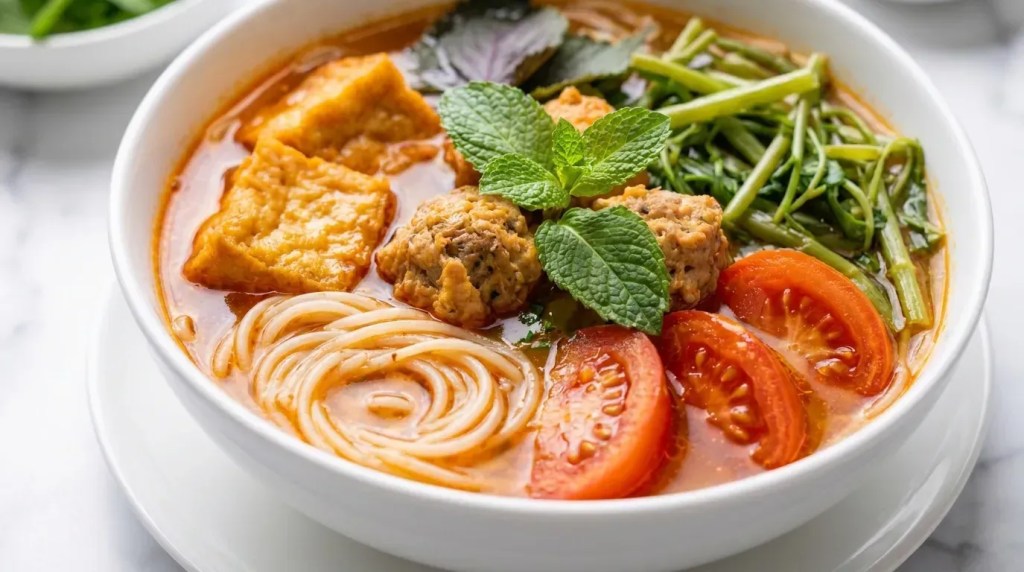
Bun rieu is pretty much a complete meal on its own, but a few sides and toppings can round out the experience even more.
I like setting out a big plate of herbs and vegetables so everyone can build their bowl exactly how they want it.
- A plate of fresh herbs, bean sprouts, and lime wedges for topping
- Crispy spring rolls on the side for extra crunch
- A cold glass of Vietnamese iced coffee to balance the savory broth
- Steamed rice on the side for anyone who wants extra substance
- Pickled vegetables for a tangy contrast to the rich broth
This pairs beautifully with Crab Cakes if you want to lean further into the seafood theme for a dinner party.
Variations of Bun Rieu
Once you’ve made the classic version, it’s fun to play around with the format a little.
Vietnamese cooks have their own regional spins on this dish, and there’s plenty of room to make it your own.
Some of these swaps change the flavor profile significantly, so try one at a time to see what you like best.
- Bun rieu oc: Add minced snail to the meatball mixture for a more traditional, briny variation
- Bun rieu ca: Mix in flaked white fish alongside the crab for extra body
- Vegetarian version: Swap the meatballs for firm tofu and mushroom based “meatballs,” and use vegetable stock instead of chicken or pork
- Spicier broth: Add extra chili oil or fresh sliced chilies directly into the simmering broth
- Extra tangy: Stir in a splash of tamarind paste for a more sour, complex broth
Read Also: Laksa Soup Recipe
Storage and Reheating
Bun rieu actually tastes even better the next day once the flavors have had time to settle, so leftovers are a win here.
Just keep the noodles separate from the broth if you’re planning to store it for more than a day, since they can get mushy sitting in the liquid.
- Store the broth, meatballs, and tomatoes in an airtight container in the refrigerator for up to 3 days
- Store cooked noodles separately in their own container in the fridge
- Reheat the broth gently on the stovetop over low heat, avoiding a hard boil so the meatballs stay intact
- Freeze the broth and meatballs (without noodles) for up to 2 months in a freezer safe container
- Thaw frozen broth overnight in the refrigerator before reheating
This pairs beautifully with my Seafood Stew for another make ahead friendly seafood soup option.
Nutritional Facts
These values are approximate and will vary depending on your exact ingredients and portion sizes.
- Calories: 380 per serving
- Protein: 24g
- Carbohydrates: 42g
- Fat: 12g
- Fiber: 3g
- Sodium: 890mg
You might also enjoy: Tomato Egg Drop Soup
Health Benefits of Key Ingredients
Beyond tasting great, bun rieu actually packs in some solid nutrition thanks to its mix of protein, vegetables, and aromatics.
The combination of crab, pork, and tomatoes gives you a nice balance of lean protein and vitamins in a single bowl.
- Crab meat: A great source of lean protein, vitamin B12, and zinc
- Tomatoes: Rich in vitamin C and lycopene, an antioxidant linked to heart health
- Fresh herbs: Add vitamin A, vitamin K, and a boost of antioxidants with virtually no calories
- Fish sauce: Provides a savory umami flavor without needing large amounts of added salt
- Bean sprouts: Low in calories and a good source of vitamin C and folate
This pairs beautifully with my Tomato Basil Soup if you want another tomato forward soup in your rotation.
FAQs About Bun Rieu
1. Can I make bun rieu without crab?
Yes, you can substitute the crab with extra ground pork or shrimp if crab isn’t available.
The broth will taste slightly different, but it will still be delicious and satisfying.
2. What can I use instead of shrimp paste?
If you can’t find shrimp paste, you can leave it out and increase the fish sauce slightly to maintain the savory depth.
The broth will be a touch milder, but still flavorful.
3. Why did my meatballs fall apart in the broth?
This usually happens when the broth is boiling too vigorously or the meatball mixture wasn’t mixed enough to bind properly.
Keep the broth at a gentle simmer once the meatballs go in, and make sure your egg and meat mixture is well combined before shaping.
4. Is bun rieu spicy?
The base broth itself is not spicy. Heat is typically added at the table through chili oil or fresh sliced chilies, so everyone can adjust it to their own preference.
5. Can I make the broth ahead of time?
Absolutely, the broth actually improves with a day of rest in the refrigerator.
Just wait to cook your noodles fresh right before serving so they don’t get soggy.
Read Also: Crab Rangoon Recipe

Bun Rieu (Vietnamese Crab and Pork Noodle Soup)
Ingredients
- 8 cups chicken or pork stock
- 2 tablespoons neutral cooking oil
- 1 small yellow onion diced
- 4 garlic cloves minced
- 6 medium ripe tomatoes cut into wedges
- 2 tablespoons tomato paste
- 2 tablespoons fish sauce
- 1 tablespoon shrimp paste
- 1 tablespoon sugar
- salt to taste
- black pepper to taste
- 1 block fried tofu cut into cubes
- 0.5 pound ground pork
- 0.5 pound lump crab meat
- 2 tablespoons dried shrimp soaked and minced
- 2 large eggs
- 2 tablespoons shallots minced
- 0.5 teaspoon salt
- 0.25 teaspoon black pepper
- 1 pound dried rice vermicelli noodles
- bean sprouts fresh, for topping
- fresh herbs cilantro, perilla leaves, mint, for topping
- sliced green onions for topping
- lime wedges for serving
- chili oil or sliced fresh chilies for serving
Equipment
- Large stockpot At least 6 quarts
- Mixing bowls
- Fine-mesh strainer
- Cutting board
- Sharp knife
- Ladle
- Wooden spoon
- Measuring cups and spoons
- Fine mesh spider strainer optional, for gently lowering and removing meatballs
- Enameled cast iron stockpot optional, for even heating
- Vietnamese crab paste with soybean oil optional, for authentic flavor
Method
- In a large mixing bowl, combine ground pork, lump crab meat, minced dried shrimp, eggs, minced shallots, salt, and pepper. Mix gently until just combined, cover, and refrigerate while you prepare the broth.
- Heat oil in a large stockpot over medium heat. Add diced onion and minced garlic, and cook for 2-3 minutes until fragrant. Add tomato wedges and tomato paste, and cook for 5-7 minutes until tomatoes begin to break down.
- Pour in the stock, then add fish sauce, shrimp paste, and sugar. Bring to a gentle boil, reduce heat to low, and simmer uncovered for 20 minutes. Season with salt and pepper to taste.
- Remove the meatball mixture from the fridge. Using a spoon or your hands, shape into loose 1-2 tablespoon balls. Raise broth heat to a gentle boil and carefully lower in the meatballs. Cook undisturbed for 8-10 minutes until they float. Add cubed fried tofu during the last 5 minutes.
- While the meatballs cook, bring a separate pot of water to a boil. Cook the rice vermicelli according to package instructions (3-5 minutes). Drain and rinse briefly under cool water to prevent sticking.
- Divide the noodles evenly among serving bowls. Ladle the hot broth over the noodles, distributing tomatoes, meatballs, and tofu evenly. Top with bean sprouts, fresh herbs, and sliced green onions. Serve immediately with lime wedges and chili oil.
Nutrition
Notes
- Use ripe, in season tomatoes for the most flavorful and naturally sweet broth.
- Don’t overmix the meatball mixture, or the texture will turn dense and rubbery.
- Keep the broth at a gentle simmer once the meatballs are in, since a hard boil can break them apart.
- Taste the broth before serving and adjust the fish sauce, sugar, and salt to your preference.
- Rinse the cooked noodles under cool water to keep them from clumping in the bowl.
- For a more traditional variation, add minced snail (bun rieu oc) or flaked white fish (bun rieu ca) to the meatball mixture.
- For a vegetarian version, swap the meatballs for firm tofu and mushroom-based “meatballs,” and use vegetable stock.
- Store the broth, meatballs, and tomatoes in an airtight container in the refrigerator for up to 3 days. Store cooked noodles separately.
- Freeze the broth and meatballs (without noodles) for up to 2 months. Thaw overnight before reheating.
- Reheat the broth gently on the stovetop over low heat, avoiding a hard boil so the meatballs stay intact.
Private Notes
Tried this recipe?
Let us know how it was!Conclusion
Bun rieu is one of those soups that feels like a warm hug in a bowl, tangy, savory, and packed with texture in every spoonful.
Once you make it at home, it’s easy to see why it holds such a special place in Vietnamese comfort food.
I hope this recipe brings a little of that comfort into your kitchen too.
If you give it a try, I’d love to hear how it turned out. Drop a comment below or share a photo, I always enjoy seeing your versions of these recipes.
Recommended:
- Khao Soi Recipe
- Chicken Noodle Soup Recipe
- Tomato Soup Recipe
- Shrimp Cocktail Recipe
- Lemon Garlic Shrimp Orzo Recipe


